|
 THE VOICE OF THE WATCHER

The voice of the Prophet sent
from the Lord
to make known to the modern
Christian the Essence of the
Gospel Message that became Lost
when the teachings of The Way
was placed in the hands of
carnal men.
The Message speaks of The Way of
Life
and of the impending doom of
those who turn away from The Way
of Truth
The
purpose of this web site is not
to teach you the truth -- but
rather, guide you in TheWay that
will enable you to learn the
Truth directly from God. The
objective of the Gospels is not
for you to read and believe --
but rather, to be used as the
Key of Knowledge that provides
you access to the One Teacher
that Jesus Commanded to seek
out, by unlocking the inner
"narrow
strait gate" to the
Kingdom that Jesus declared is
within you.
It is
written in the Book of the Holy
Word of God:
"At the
end of seven days the word of
the LORD came to me: Son of man,
I have made you a watchman for
the house of Israel; so hear the
word I speak and give them
warning from me. When I say to a
wicked man, You will surely die,
and you do not warn him or speak
out to dissuade him from his
evil ways in order to save his
life, that wicked man will die
for his sin, and I will hold you
accountable for his blood. But
if you do warn the wicked man
and he does not turn from his
wickedness or from his evil
ways, he will die for his sin;
but you will have saved
yourself. Again, when a
righteous man turns from his
righteousness and does evil, and
I put a stumbling block before
him, he will die. Since you did
not warn him, he will die for
his sin. The righteous things he
did will not be remembered, and
I will hold you accountable for
his blood. But if you do warn
the righteous man not to sin and
he does not sin, he will surely
live because he took warning,
and you will have saved
yourself" (Ezek
3:16-21 NIV).
For
the most part, modern Christians
haven't the slightest idea how
these words of universal warning
apply directly to them in our
present time. How can they --
they become offended when it is
suggested that they embrace
sinners by perpetually preaching
the
"milk" of the gospel,
while rejecting the Higher Truth
of Genuine Salvation? As
Christians, we traverse land and
sea to preach the
"elementary"
teachings which the Apostle Paul
portrays as the gospel of the
simple faith, while we ourselves
refuse to go on to maturity and
perfection, as seen in the
words:
"Therefore let us leave the
elementary teachings about
Christ and go on to maturity,
not laying again the foundation
of repentance from acts that
lead to death, and of faith in
God, instruction about baptisms,
the laying on of hands, the
resurrection of the dead, and
eternal judgment"
(Heb 6:1-2 NIV). Thus, the
very same exact flaw that Paul
saw among the Gentile
congregations in his time,
remains true with respect to
modern Christians -- and was
further true of the leaders of
the Sadducees and Pharisees
where Jesus said:
“How
terrible for you teachers of the
[simple faith]! You have kept
the key that opens the door to
the house of knowledge; you
yourselves will not go in, and
you stop those who are trying to
go in!” (Luke 11:52
TEV).
In the
modern language of the New
Living Translation the above
commandment of Paul to the
church reads:
"So let
us stop going over the basics of
Christianity again and again.
Let us go on instead and become
mature in our understanding.
Surely we don't need to start
all over again with the
importance of turning away from
evil deeds and placing our faith
in God." The problem
is that the religion of the
simple faith has become so
ingrained in the thinking in
both the modern Christian and
society at lodge, that as a body
of believers we not only know
nothing more, but actually
condemn the very concepts and
teachings that open the door to
higher knowledge, and thus we
remain stagnant and spiritually
impotent. In fact, anything
even approaching the framework
of what would be considered
genuine Christianity from a
first-century perspective, is
portrayed as a cult or right
wing extremism.
There
is an ancient rabbinic saying
that goes like this:
"Show
me your strength, and I show you
your weakness!" The
Christian Church today is a
viable entity that brings about
a great amount of good in the
world. It cares for the sick
and the needy -- it turns drug
and alcohol addicted lives
around -- it provides people of
faith with an organization to
lean as the people endeavor to
overcome the obstacles of life
-- it is a gateway in the world
that shelters the people, and
draws them nearer to God. And
therein lies the problem --
i.e., because it's doctrines of
belief are founded in carnal
man's attempt to explain
Mysteries that are beyond his
comprehension, it obstructs the
journey of the disciple in their
quest for Truth, and has become
a substitute temple made with
the hands of man.
With
good reason many sincere
modern-day Christians should be
greatly offended by these
statements! After all, they
believe in Jesus -- they are
attempting to live a moral life
in accordance with biblical
standards -- and they believe
they are saved and will go to
Glory when they pass from this
life! And without realizing
it, they will of themselves
proclaim the error of their ways
which the Apostle made reference
to: The Kingdom is not something
we will go to when we die -- but
rather, it is necessary to die
to this life while still alive
in the physical body, in order
to inherit the promise and enter
the Kingdom of God! Moreover,
the acceptance of Jesus as one's
personal Lord and Savior is not
the culmination of the process
of being saved and born again --
but rather, the beginning! The
key to the dilemma is found in
the words of the Apostle where
he teaches the absolute
necessity:
"Therefore let us leave the
elementary teachings about
Christ and go on to maturity".
What
is maturity? What modern-day
Christians fail to realize, is
the reality that the teachings
of The Way is not a system of
beliefs and worship -- but
rather, it is the path that the
child of God walks, in order to
return Home to their Father. @
Once
again the modern-day believer
has an absolute right to be
offended by these words when it
is realized that the flaw in our
thinking is not so much the
fault of the church -- but
rather, the government takeover,
capture and hostile occupation
of the church throughout much of
its history. What I am saying
is that the politicians of the
past needed a means to continue
to rule over the masses of
people, so they abducted the
religion of Jesus, killed all
his genuine followers, and
rewrote the tenets of religious
belief in order to support their
own very secular agenda! That
over the course of time these
alien tenets of belief became
intimately ingrained in what has
come to be accepted as New
Covenant thought, is not only
true, but is a reality that few
Christians today possess the
necessary knowledge and
comprehension of the facts to
overcome. Thus, the question
is that when the Lord answers
our prayers and sends us a
spiritual guide to help us, will
we even listen to what this
guide tells us, or will we
condemn him in the manner that
the Old Testament prophets were
dealt with?
 If
what I am stating is true, then
we must pose the question: Why
do we unknowingly reject the
Higher Truth of the Gospel, and
cling to the religion of the
"simple
faith"? Actually,
it is because we don't know any
better. In many respects we
are doing the best we can under
the conditions of life we are
presently dealing with. To do
better, will require both
knowledge and a means to
overcome our present-day
obstacles that inhibit our walk
with the Lord. The problem is
seen in the fact that because
the fourth century Church
created by the Emperor
Constantine threw away the Key
of Knowledge when it recreated
the teachings of the New
Covenant in order to make the
teachings of Jesus support a
secularized institutional church
-- a church which supported the
doctrines and traditions of
Pagan Rome -- we no longer even
know how to fulfill the
commandment of the Apostle where
he conveys to us the absolute
need to move beyond the
elementary teachings of the
"testimony
of Christ" in the
endeavor to go on to maturity.
How can we, when we no longer
possess the knowledge to bring
about the necessary
transformation of our carnal
nature? The result is that
while we claim to place our
faith in Jesus, we never bring
about the necessary changes in
our thinking and lives, because
we worship the Lord with our
lips, and remain clinging to the
culture and mindset of this
world. If
what I am stating is true, then
we must pose the question: Why
do we unknowingly reject the
Higher Truth of the Gospel, and
cling to the religion of the
"simple
faith"? Actually,
it is because we don't know any
better. In many respects we
are doing the best we can under
the conditions of life we are
presently dealing with. To do
better, will require both
knowledge and a means to
overcome our present-day
obstacles that inhibit our walk
with the Lord. The problem is
seen in the fact that because
the fourth century Church
created by the Emperor
Constantine threw away the Key
of Knowledge when it recreated
the teachings of the New
Covenant in order to make the
teachings of Jesus support a
secularized institutional church
-- a church which supported the
doctrines and traditions of
Pagan Rome -- we no longer even
know how to fulfill the
commandment of the Apostle where
he conveys to us the absolute
need to move beyond the
elementary teachings of the
"testimony
of Christ" in the
endeavor to go on to maturity.
How can we, when we no longer
possess the knowledge to bring
about the necessary
transformation of our carnal
nature? The result is that
while we claim to place our
faith in Jesus, we never bring
about the necessary changes in
our thinking and lives, because
we worship the Lord with our
lips, and remain clinging to the
culture and mindset of this
world.
From a
modern-day Christian
perspective, the problem is
further complicated by the
reality that regardless of the
fact that many sincere members
of the clergy are very much
aware of the problem, they are
themselves without a means to
correct the situation.
Regardless of the fact that they
are sincere, they are themselves
at a spiritual impasse because
they simply don't know what more
they can do. How can they?
They were not present when Jesus
taught the spiritual precepts of
the New Covenant! They never
heard him speak, much less sit
with him
"in the house"
where he revealed the Mysteries
of God privately to his
disciples! Though our
present-day clergy are often
sincere in their endeavor to
serve God and His flock, they
learned their concepts of
religions either in school, or
from other men. Moreover, if
it was such a simple task to
merely read the Bible and learn
the Word of God, then why does
everyone who studies the
scripture see a different, and
often conflicting message, in
it's pages?
 Just
as important is the fact that
our modern cultural mindset is
in total conflict with the
foundational thinking which
Jesus referred to as the
"good
ground" (Mark 4:8)
within which the Word must be
planted. Unknowingly, when we
ignore the teachings conveyed in
the parable of the
sower and the seed, we
ignore the very fundamental
principles of the teachings of
The Way. While the Jesus we
preach from our pulpits today
saves everyone irrespective of
what they accomplish in their
lives, the parable of the sower
and the seed demonstrates the
absolute necessity for us to so
alter our life to thoroughly
embrace the Word that is sown
within us, that we become a
vessel of Light that is in every
way alien to the thinking of
this world. Just
as important is the fact that
our modern cultural mindset is
in total conflict with the
foundational thinking which
Jesus referred to as the
"good
ground" (Mark 4:8)
within which the Word must be
planted. Unknowingly, when we
ignore the teachings conveyed in
the parable of the
sower and the seed, we
ignore the very fundamental
principles of the teachings of
The Way. While the Jesus we
preach from our pulpits today
saves everyone irrespective of
what they accomplish in their
lives, the parable of the sower
and the seed demonstrates the
absolute necessity for us to so
alter our life to thoroughly
embrace the Word that is sown
within us, that we become a
vessel of Light that is in every
way alien to the thinking of
this world.
Thus,
the problem which confronts our
modern clergy and faithful flock
of believers: There is very
little in our present-day
society that would even remotely
support the tenets of a truly
spiritual religion. While
faith is of the utmost
importance, the parable of the
sower and the seed, as well as
the very essence of New Covenant
thought that is the paramount
theme throughout the scriptures,
requires us to make change in
our lives -- radical change --
if we are to become the
"good
ground" that
multiplies the seed a
hundredfold from what we
receive.
Because we dwell in a culture
devoid of the necessary biblical
mindset that promotes the true
growth of the Living Word, and
the Key of Knowledge was thrown
away by the Church of
Constantine, it is near
impossible for our present-day
clergy and congregation of
believers to overcome the
obstacle that burdens them in
their search for Truth and
Light. Because the
foundational doctrines which we
have inherited from the Church
of the Roman Empire has left us
spiritually complacent, we fail
to perceive the absolute need to
develop a truly serious
relationship with the Lord --
i.e., one where we reflect every
commandment and teaching of the
Bridegroom -- to whom we must
daily remain in total subjection
-- and who awaits our total
servitude to The Way of the
Light.
During
the Reformation a group of
sincere believers attempted to
remove the strongly infused
presence of Paganism that had
become firmly ingrained in the
church -- but contrary to modern
Christian perception, their
efforts only brought about very
partial results. Moreover,
because Luther's doctrine of
faith was a reactionary doctrine
which was founded upon the
corruption of the Roman Church,
in many ways the Protestant
Churches which emerged from the
Reformation actually plunged the
Christian religion further into
the abyss of darkness which was
begun by the hostile takeover
and occupation by the secular
politicians of Pagan Rome.
Throughout the world we
routinely preach that we are
saved by faith regardless of our
works or the manner in which we
live, and yet we continually
ignore the many places where we
are told to:
“Put to
death, therefore, whatever
belongs to your earthly nature”
(Col 3:5 NIV) -- which
transmutation through the
metamorphosis of our lower
nature, is absolutely necessary
to experience the next stage of
birth that Jesus taught permits
us to enter the Kingdom of
God. The result is that
because we no longer possess the
Key of Knowledge that opens the
door to the indwelling Kingdom,
we preach a philosophical
rebirth in place of the true
spiritual rebirth which is the
foundation of the teachings of
The Way.
If it
is true that we are saved by
merely calling upon the name of
the Lord and accepting him as
our savior -- and if it is true
that we are saved from the
moment we turn to the Lord
regardless of our works or
actions -- then we owe it to
ourselves to pose the question:
Why are we told to put to death
whatever belongs to our earthly
nature? Moreover, as people of
the earth, how can we even begin
to accomplish this requirement?
The
problem is seen in the fact that
we no longer possess the
foundational knowledge that is
necessary to fulfill the
commandment of the Apostle to
his followers. Because of the
past secular takeover and
hostile occupation of the Church
of the New Covenant, we only
have the teachings of the simple
faith -- and we no longer
possess either the knowledge or
the means to
"put to
death... our earthly nature"
which inhibits and undermines
our own spiritual growth and
development. Regardless of the
fact that we believe --
regardless of the fact that we
are sincere in our desire to
serve the Lord -- we simply fail
to comprehend that it is our
"earthly nature" that
anchors us to this world -- and
it is our own
"earthly nature" that
obstructs our entrance into the
Kingdom that Jesus declared.
Having
been alienated from the
spiritual essence of the
teachings of The Way by the very
Pagan doctrines, mindset and
traditions of carnal men, we
therefore interpret the gospel
to mean that the Kingdom is a
place we will go to when we die,
rather than comprehending that
when our
"earthly nature"
dies through the process of
transmutation, we will be able
to enter the Kingdom even while
still alive in the physical body
our souls presently inhabit.
Thus, regardless of the fact
that we are sincere and correct
in our beliefs, we remain
spiritually stagnant because we
no longer comprehend the means
that we must actively apply the
Gospel message in our lives --
which application is necessary
in order to overcome the flesh
and become truly spiritual!
As
Christians, we ignore the words
of the Apostle where he
commanded:
"Do not be unequally yoked
together with unbelievers. For
what fellowship has
righteousness with lawlessness?
And what communion has light
with darkness? And what accord
has Christ with Belial? Or what
part has a believer with an
unbeliever? And what agreement
has the temple of God with
idols? For you are the temple of
the living God. As God has said:
I will dwell in them and walk
among them. I will be their God,
and they shall be My people.
Therefore Come out from among
them and be separate, says the
Lord. Do not touch what is
unclean, and I will receive you.
I will be a Father to you, and
you shall be My sons and
daughters, says the Lord
Almighty" (2 Cor
6:14-18 NKJ). While it is
admirable that as Christians, we
focus our attention on the
unsaved -- in so doing, though,
we have permitted culturized
Christians who live in
accordance with the thinking and
ways of the ruler of this world,
to set the standards, and thus
limit and obstruct the spiritual
expression of the church as a
whole.
Because we no longer focus on
the absolute need for the proper
application of biblical
principles in the life of the
individual, Christians have
permitted themselves to become
defined by culturized believers
who adhere to no set of
standards of behavior, morality,
or manner of living. We only
have to turn on our television
sets to hear men and women who
present themselves to the world
as members of the clergy, who
label other Christians who hold
to biblical principles as
"right wing extremists"
whose tenets of religious belief
are self imposed -- and in the
eyes of the world, defining
sincere biblically based
believers as cultists who are
out of the mainstream of
contemporary (Christian?)
thought.
Are
these sincere believers cultists
and right wing extremists who
embrace a self-imposed and
unnecessarily strict
interpretation of the
scriptures? Where does the
truth lie? In our search for
this all-important answer we
must pose the question: Is it
within our ability as faithful
believers to know for sure which
Christian sect is right -- which
is wrong -- which is more right
than others -- or could the
Apostle say of the modern
church:
“For all have [deviated from
the path], and come short of the
glory of God” (Rom
3:23 KJV)?
While
the world watches, Christian
contends with Christian over
which doctrine of belief is
correct -- i.e., because we are
saved by faith and not works,
whether it is necessary to live
in accordance with any set
standards or morality -- which
of the almost countless sects
are approved by God -- whether
God is all-inclusive, or does He
expect us to live in accordance
with a set of standards --
whether God ordains gay
marriages and clergy -- whether
women can be members of the
clergy -- whether the
prohibition on sex outside of
marriage is outdated thinking --
whether or not abortion is a sin
-- as well as every other aspect
of our present-day culture which
is championed by men and women
who claim to speak for Jesus and
know what is or is not
acceptable. Is this what Jesus
came to teach to mankind --
i.e., that we must decide
without any first hand
knowledge, which interpretation
of the scriptures are correct?
Which tradition and doctrine of
other men is correct? I don't
think so!
One of
the most pressing issues that
divides the church today is the
issue of morality and
homosexuality. Fundamentalist
Christians open their Bibles and
conclude that God hates
Homosexuals and every other form
of immorality. More liberal
thinking believers counter this
by pointing out that the
condemnation of homosexuals was
done away with by Jesus, along
with the rest of the tenets of
the Mosaic Law. To the
absolute horror of conservative
Christians, some homosexual
believers further content that
Jesus himself had a sexual
relationship with the disciple
that he loved above the rest.
Important questions are in fact
raised by the present-day
conflict among conservative and
liberal believers. This web
site is not listed among such
organizations as Christian
Family Links which requires that
the author of the site believe:
"You
must believe in salvation by
grace alone, and that salvation
is immediate and eternal upon
acceptance of Jesus as a
one-time sacrifice for your
sins, and not obtained through
works, sacraments, traditions or
merits of our own".
Ultimately, regardless of the
fact that good and sincere
people believe this, I believe
that James -- i.e., the brother
of Jesus and the first leader of
the Jerusalem Church --
demonstrated the defectiveness
of this doctrine of belief when
he wrote:
"But do you want to know, O
foolish man, that faith without
works is dead?"
(James 2:20 NKJ). Why?
Because in order to be a
Christian, one must live in the
manner that was prescribed by
the Lord.
Can
there be a Christian porn
site? Can a Christian own and
run an abortion clinic? If it
is true that we are all sinners,
and we are thus saved by faith
regardless of works, then the
homosexuals may very well be
correct in their assertion that
they are saved regardless of
their homosexuality. If it is
true that all believers are
sinners who are saved by the
blood of Christ -- and
"...salvation is immediate and
eternal upon acceptance of Jesus
as a one-time sacrifice for your
sins" -- and Jesus is
all-inclusive in his love for
those who have called upon his
name, then isn't it the
conservative Christian who
judges and condemns the
homosexual and believer who
lives an immoral lifestyle, the
one who is actually the greater
sinner?
From a
doctrinal perspective, the
solution to the dilemma is not
easily resolved. If Martin
Luther could see the wholesale
immorality and lack of standards
that would envelop the church as
a result of his umbrella
doctrine that man is saved by
faith irrespective of the manner
in which purported believers
live their lives, he would
himself rise up and call for a
new Reformation!
The
problem is that the modern
clergy and religious leaders
can't do anything about the
immorality that plagues the
modern church. When they even
momentarily attempt to step out
from under the umbrella doctrine
of faith and salvation by grace,
they are immediately confronted
with the deluge of flawed
doctrine that they have no means
to deal with. Thus, it is the
very core teaching that man is
saved by faith irrespective of
what they accomplish in their
lives, that permits the Prince
of Darkness to rule the hearts
of many who call themselves
Christians and people of faith.
How
can I make such a statement?
The moment we poke our heads out
from under Luther's doctrinal
umbrella, and begin to say that
regardless of faith, we are
accountable to a certain
standard of works, we literally
open Pandora's Box with respect
to what is required to be saved
and inherit eternal life. If
all people are sinners -- and
all people must be saved by the
blood of Christ -- then why are
homosexual sinners often held to
a different standard than
heterosexual sinners? If all
are forgiven by the blood of
Christ, then the liberal
believer must be correct in his
assertion that regardless of
each individual flavor and
variety of sin, all who call
upon the name of the Lord are
saved!
Once
we attempt to place qualifiers
and restrictions on the
believers forgiveness through
Grace, then from a doctrinal
perspective we enter dangerous
territory, and we can no longer
be sure of anything. In view
of the fact that man is a
congenital sinner who cannot
save himself -- and thus he must
come to Jesus -- if works are
required and man can in fact
work out his own salvation, then
the whole structure of modern
Christian thought becomes
undermined. Further, whose
concept of what is required with
respect to works is correct --
i.e., the Fundamentalist who
condemns drinking, dancing, sex
outside of marriage, as well as
almost every other enjoyment of
life, or the liberal who has no
moral compass, and is thus not
guided by any set standard of
ethics and principles?
Whose
interpretation of the Bible is
correct? While as Christians
we can argue and contend among
one another until we have taken
our very last breath, it can
also be argued that the conflict
among present-day believers is
in fact superficial -- and from
a spiritual perspective, the
position of the right wing
extremist is no different than
the more liberal believers they
condemn. How can I make such a
statement? The answer is
simple once it is realized that
in the same way that the liberal
Christians claim that works are
not more important than faith,
the more conservative Christians
profess a parallel position with
respect to the meaning of faith
and works from a modern-day
perspective, in relation to the
meaning of faith and works from
the perspective of the original
people of the New Covenant.
While
the Fundamentalist Christian
claims to live in accordance
with the Bible, we must pose the
question: Whose interpretation
of the scriptures do they adhere
to? If their interpretation of
the Bible is not the same as
it's authors -- and if their
perception of Jesus has been
colored and tainted by manmade
doctrines -- then how can the
modern Fundamentalist be viewed
any differently than the
Fundamentalist Pharisees who
Jesus condemned! While the
modern Fundamentalist can
perhaps philosophically distance
himself from the Pharisee by
virtue of the fact that they
profess to believe in the Son of
God, that more is required is
easily seen in the words of
Jesus where he warned:
"But
why do you call Me 'Lord, Lord,'
and do not do the things which I
say?" (Luke 6:46 NKJ).
From a
purely spiritual point of view,
both the present-day liberal
believer as well as their
conservative brother and sister,
are actually in the same boat --
i.e., both not only ardently
cling to the manmade doctrines
and the philosophy of their
beliefs, but each are equally
gambling with their own
salvation by virtue of the fact
that each awaits the event of
their physical death as the
means to prove their dogmatic
position. Where the liberal
Christians proclaim that the
love of Jesus has no bounds, and
all are saved by grace and the
blood of the lamb irrespective
of the manner in which the
people live, the conservative
Christian is literally betting
their lives on their fundamental
interpretation of the Bible and
strict adherence to the
elementary teachings of Christ
and the gospel of the simple
faith.
Isn't
it ironic that it appears we
have no means to answer the most
profoundly important question in
life? We would not buy a
product if it did not come with
a users manual. Everything we
purchase has a warranty. We do
not drive without automobile
insurance. Our place of
residence has homeowner's
insurance. We speak of the
need for universal medical
insurance. We continually
legislate, adjudicate, and
attempt to insure and direct the
outcome of every aspect of our
lives -- except for life
itself! Thus, when it comes to
the most important aspect of our
lives -- i.e., comprehending the
very reason for life itself --
we cling to speculation and
conjecture, instead of going
directly to the Source!
While
religious people -- and
especially Christians -- will
contend that they have found the
answer in the Bible, the fact
that no two sects of believers
agree on even the most
fundamental elements of
Christian doctrine fly's in the
face of rationality, and does
not meet with any standard of
assurance. Regardless of the
claims of many believers who
proclaim the simplicity of the
Word, and will convey to you the
clarity with which they
understand the gospel, human
experience has proven that the
message of the scriptures is not
plain and easily discerned.
Yet, what the critics as well as
the factional champions of both
the Bible and religion fail to
comprehend, is the reality that
the scriptures were written in
such a manner that each person
would see a different
doctrine.
What
we fail to realized is that both
the scriptures as well as life
itself, is multidimensional --
and its multidimensional
dynamics are beyond the ability
of all but a very few
individuals to comprehend and
understand the full depth of the
great Truths that are
revealed. Does not the New
Testament itself warn us that
there is a meaning to the
scriptures that cannot be
perceived with man's carnal
senses and understanding:
"And He
opened their understanding, that
they might comprehend the
Scriptures" (Luke
24:45 NKJ). Doesn't the Apostle
warn the Galatians that a
literal reading of the
scriptures will mislead them --
providing them the example of
the two wives of Abraham and
saying:
"Which things are an
allegory: for these are the two
covenants..." (Gal
4:24 KJV).
Proof
of both the allegorical and
multidimensional nature of the
scriptures is demonstrated in
the reality that universally,
people from all walks of life
open the pages of the Bible and
say: The message that I see is
very plain and simple -- and
yet, the message they see is in
direct conflict and opposition
to the uncountable number of
doctrines that others have
formed from their own very plain
and simple perception of the
Bible. Proof of this is easily
demonstrated: The Jehovah’s
Witness and the Evangelical
Christian cannot agree on
anything, and each are viewed as
extremists by the mainstream
all-inclusive churches -- yet
each reads and studies the same
Bible.
From
the perspective of the
scriptures, the very assertion
by many religious sects that the
message of the Bible is very
clear must be viewed as a
witness against themselves. On
the one hand they proclaim that
God is All-Knowing -- All-Seeing
-- and He knows every event from
the beginning till the end of
time. If this is true, then we
must question why God would not
have foreseen the great many
opinions and conflicting
doctrines that would be born
from the uncountable number of
misconceptions derived from the
Bible?
Ask
yourself a truly pertinent
question: Is God simply not
intelligent enough to compose
the clear and concise articles
of faith and belief that have
been composed by man -- articles
of faith which continue to serve
as the foundation of church
doctrine today? All the
confusion that has existed for
thousands of years could have
been alleviated if God only
possessed the vision, the
clarity of thought, the wisdom
and perception that Christians
have demonstrated, and simply
wrote the words:
I am God
-- my name is Jesus -- and
everyone is required to affirm
their belief in me!
This is a very simple message --
and if it is true, then people
of faith must agree that God
would have made this very clear
and concise statement in order
for all people to know the
truth.
Any
student of the Bible knows very
well that the scriptures does
not say this -- but what it does
say is that the intellect of
natural man will be greatly
confused by what is written, and
regardless of how often or
sincerely he studies the text of
the Bible, he will be unable to
get a proper sense of the
revelation that lies beneath the
body of the written word.
Why? The problem is that we
believe and cling to ideas which
sound good to our own manner of
thinking and reasoning, and we
reject the very warnings which
the pages of the scriptures
continually set before us in a
thousand different ways.
In the
manner of the fallen religious
societies of the past, modern
believers are under the
assumption that what they see in
the Bible is very clear -- that
great numbers of their flock
will go to Glory -- and they
base this assumption on
doctrines that are founded upon
what they perceive from the
pages of the scriptures. Yet,
in contradistinction to this
doctrine, it was Jesus himself
who warned that
“many
be called, but few chosen”
(Matt 20:16 KJV). With regard
to the question as to who Jesus
was speaking about when he said
these words, it is clear that he
spoke of those who considered
themselves to be his followers.
When
Jesus used the phrase in
reference to the many who are
called, the reality of this
statement is easily seen in the
words of the Apostle where he
warned the flock of baptized and
committed Christians:
“So, if
you think you are standing firm,
be careful that you don't fall!”
(1 Cor 10:12 NIV). What this
means is that history can again
repeat itself, and those who
think they are saved, or the
chosen of God, and believe they
are “standing firm” in
the faith, may be the next
generation of religious people
who “fall!”. Moreover,
upon closer examination of both
the New and Old Testament
Scriptures, it can easily be
demonstrated that it is those
who considered themselves
“standing firm” in the
faith, that were imbued with the
greatest error from the
perspective of the prophets that
were sent from God to speak to
the people. While Jesus
displayed great compassion on
the lost sheep, it is also true
that he reserved his greatest
condemnation for the religious
leaders of his day who led the
sheep in the wrong direction.
What Jesus said was that his
followers need not be taught by
other men -- but rather, each
will know the Truth because they
will learn directly from the
Father. In direct opposition
to to this important New
Covenant concept, each sect
today continues to remain
anchored to their doctrinal
position -- rejecting the
universal and constant theme and
assertion of the very scriptures
they claim to champion -- i.e.,
that man has it within his
ability to know the Truth by
virtue of the promise that the
Lord Himself will teach and
reveal it to them.
The
Apostle Paul understood this
fact that is ignored by both
liberal and conservative
Christians today, and it was for
this very reason that he
condemned all factions and the
creation of sects! In fact, if
Paul was able to come and speak
in our churches today, he would
repeat the exact same words that
he spoke to the baptized,
committed, and spirit-filled
Christians at Corinth when he
warned them:
"And I,
brethren, could not speak to you
as to spiritual people but as to
carnal, as to babes in Christ. I
fed you with milk and not with
solid food; for until now you
were not able to receive it, and
even now you are still not able;
for you are still carnal. For
where there are envy, strife,
and divisions among you, are you
not carnal and behaving like
mere men?" (1 Cor
3:1-3 NKJ). And what did the
Apostle of faith teach with
respect to the means of
overcoming this "envy,
strife, ...division" and the
flaw in their inherent carnal
nature? Paul's prescription
was seen in his assertion that
the true Christian was able to
put to death and overcome their
carnal nature, and in their
spiritual rebirth that would
make them a "new creation",
they would then be able to learn
directly from Christ.
What
Paul preached to the believers
in his day was that those who
argued over manmade doctrines
and human perceptions of the
Word, were in fact sinning and
turned out of The Way, because
if they were in fact genuine
believers who worked to put to
death their carnal nature, they
would then be able to personally
ask the Lord Himself the Truth
of all matters. As the
Christians of the simple faith,
we are today a mere shadow of
our true potential. The very
Greek word Christ denotes a
person of an Anointed and
Illumined mind. While man in
his natural organic state of
being utilizes less than ten
percent of his potential of
mind, the Genuine Mature
Christian should know all things
-- be all things -- excel where
carnal man fails -- and possess
the intellect and the knowledge
to explain and demonstrate the
Presence of God to the
scientist, the musician, the
mathematician, the doctor, the
lawyer, the philosopher, the
craftsman and every other
discipline known to man.
If the
Bible is correct in its
assertion that we were created
in the image and likeness of our
Heavenly Father, then the
Apostle is also correct in his
assertion that we are the
offspring of God:
"For in
him we live and move and have
our being. As some of your own
poets have said, 'We are his
offspring'" (Acts
17:28 NIV). Didn't Jesus
himself confirm this fact when
he said to the Jews:
"Is it
not written in your law, I said,
'You are gods'? If He called
them gods, to whom the word of
God came (and the Scripture
cannot be broken), do you say of
Him whom the Father sanctified
and sent into the world, You are
blaspheming, because I said, I
am the Son of God?"
(John 10:34-36 NKJ).
This
higher reality of mankind is
further revealed in the words of
the Apostle John:
"Behold
what manner of love the Father
has bestowed on us, that we
should be called children of
God! Therefore the world does
not know us, because it did not
know Him. Beloved, now we are
children of God; and it has not
yet been revealed what we shall
be, but we know that when He is
revealed, we shall be like Him,
for we shall see Him as He is.
And everyone who has this hope
in Him purifies himself, just as
He is pure" (1 Jn
3:1-3 NKJ). Thus, the Genuine
Christian who has moved on to
maturity, is the one who has
"...purified himself, just as He
is pure". Why?
Because the Genuine Christian
who has gone beyond the entry
level doctrine of the simple
faith, has overcome and
transformed his carnal nature --
and being spiritual, Knows what
the Father Knows -- sees what
the Father sees -- and being of
an Anointed Mind, perceives all
things from the smallest element
of the building blocks of the
natural world, to the very
structure and pattern of
Creation and the Highest of
Heavens. While the modern
Christian will be shaken by such
a perception of the potential of
man, this was not the case among
the earliest of Christians who
confirmed the Truth for
themselves by walking in The
Way.
What
would appear impossible to the
mind of carnal man, is easily
accomplished by the Anointing
(Christ) of the Holy Spirit.
Once we begin to understand the
Pattern of Creation, and possess
the Knowledge of how to overcome
our lower carnal nature, then we
begin to inherit the Promise and
the Vision of the scriptures as
we become transformed into
citizens of the Heavenly Kingdom
who happen to have a physical
presence in this world. Didn't
Jesus himself promise that his
followers will know and do even
greater works than he did? As
seen in the words:
"Truly,
truly, I say to you, he who
believes in Me, the works that I
do shall he do also; and greater
works than these shall he do;
because I go to the Father"
(John 14:12 NAS).
The
person who is the Genuine
Christian, is the one who has
moved beyond the
"elementary"
doctrines of the Christ, and has
become mature. This
transformation of our carnal
nature into spiritual, is in
fact the true essence of the
process of rebirth that is
declared in the Gospel of John,
and is in fact the foundation of
faith that was declared by the
Apostle Paul. Thus, when the
disciple begins the journey of
walking in The Way, it is the
process of crucifying the flesh
that opens the "strait gate"
which provides us entrance into
the Kingdom -- and the door to
the Kingdom must be opened while
we are still alive in the
physical body we presently
inhabit.
The
striking differences between the
original teachings of the New
Covenant and the religion of the
simple faith that remains today
is easily demonstrated. In the
approximate year of 178 of our
Common Era, Celsus, the
Epicurean Philosopher and
opponent of the Church,
published a rather embarrassing
work in opposition to
Christianity known as The
True Word or Discourse.
It is said that this work was
widely disseminated and used by
the Pagan world as an attack on
the early Church. Seventy
years after its publication
The True Word was still so
widely circulated, that the
Church Father Origen was
commissioned by St. Ambrosius to
refute this attack by Celsus.
In our
modern day it can be said that
this reply by the Church Father
Origen is even more important
than when it was written.
Why? Because the majority of
Christians today have been so
disenfranchised from the essence
of the teachings of The Way that
Jesus taught, that it is as if
they are practicing a different
religion. Again, many sincere
believers will be offended by
this statement -- saying, how
can you make such an
allegation? I can, because it
is the truth! When Jesus said
the immortal words:
"Repent: for the kingdom of
heaven is at hand"
(Matt 4:17 KJV), if a more
precise Greek to English
translation was to be made, this
would instead read:
"Open
and unloose the mind, for the
Kingdom of Heaven is at hand"!
Which words conveys the reality
and the essence of New Covenant
teachings with respect to The
Way being a bridge between this
world of the
"outer
darkness" that leads
the Genuine Christian along the
"narrow
path" that opens the
"strait
gate" into the
indwelling Kingdom of God.
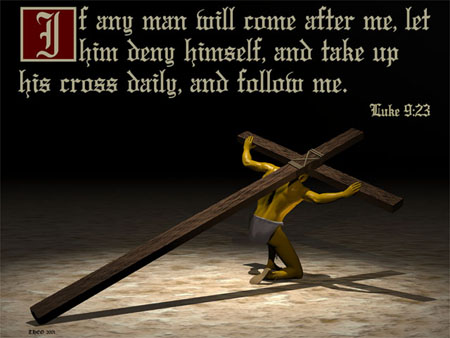 The idea that we must die in
order to enter the Kingdom,
means that we must die with
respect to the thinking and
culture of this world! If we
physically die without having
picked up our crosses and walked
in The Way, then our end will
not be in accordance with what
is being preached from our
pulpits today! And while we
are commanded to preach the Good
News to those who are lost, we
are to convert the world by
letting our Light shine so the
lost will themselves be guided
into the Kingdom of our Eternal
Father. In the word of St.
Francis,
"By all
means preach the Gospel, and
only if you must, use words"!
In our endeavor to enlighten
ourselves with regard to a much
clearer picture of the original
Gospel message as it was
envisioned by the early Gentile
church at that time prior to its
Paganization under the
government of Rome -- and in our
effort to begin the process of
comprehending our present day
theological limitations which
was a result of the Reformation
-- it would be very helpful for
us to begin by examining the
church prior to the time when
its doctrine came under the
direct control of a series of
Roman Emperors in the fourth
century. From this
perspective, what we have in
both The True Word, and the
official reply of the church in
the form of Origen's work known
as Origen Contra Celsum,
or, Origen Against Celsus, is a
rather unique glimpse into the
beliefs and doctrines of the
first and second century Gentile
Christian Church. Unique, in
that the text not only contains
the allegations of the second
century Pagan world against the
Church, but also the official
reply of the Church to these
allegations. The document
known as The True Word no
longer exists, but its text is
largely preserved in the eight
(8) books that Origen wrote in
the endeavor to refute the
charges against the Church by
the Pagan Philosopher Celsus.
The idea that we must die in
order to enter the Kingdom,
means that we must die with
respect to the thinking and
culture of this world! If we
physically die without having
picked up our crosses and walked
in The Way, then our end will
not be in accordance with what
is being preached from our
pulpits today! And while we
are commanded to preach the Good
News to those who are lost, we
are to convert the world by
letting our Light shine so the
lost will themselves be guided
into the Kingdom of our Eternal
Father. In the word of St.
Francis,
"By all
means preach the Gospel, and
only if you must, use words"!
In our endeavor to enlighten
ourselves with regard to a much
clearer picture of the original
Gospel message as it was
envisioned by the early Gentile
church at that time prior to its
Paganization under the
government of Rome -- and in our
effort to begin the process of
comprehending our present day
theological limitations which
was a result of the Reformation
-- it would be very helpful for
us to begin by examining the
church prior to the time when
its doctrine came under the
direct control of a series of
Roman Emperors in the fourth
century. From this
perspective, what we have in
both The True Word, and the
official reply of the church in
the form of Origen's work known
as Origen Contra Celsum,
or, Origen Against Celsus, is a
rather unique glimpse into the
beliefs and doctrines of the
first and second century Gentile
Christian Church. Unique, in
that the text not only contains
the allegations of the second
century Pagan world against the
Church, but also the official
reply of the Church to these
allegations. The document
known as The True Word no
longer exists, but its text is
largely preserved in the eight
(8) books that Origen wrote in
the endeavor to refute the
charges against the Church by
the Pagan Philosopher Celsus.
In
examination of this document,
the modern Christian must
initially ask: Who today would
accuse the Christian Church of
being a
“secret system”?
No one! Because the Church
today no longer embodies the
original threefold nature (body,
soul and spirit), and has thus
lost its spiritual essence --
being only of the carnal body,
it is today a mere shadow of its
former self that is was over the
first three centuries of its
existence. Therefore, it is
important for us to recognize
that such an allegation would be
totally unheard of in our
present time.
The
Church today views its mission
as a sort of religious outreach
to save sinners -- and yet,
quite contrary to the modern
agenda, Celsus viewed sinners as
being detrimental to a religion
such as Christianity. In fact,
he questioned why they were even
tolerated. Before we inquire
how such a statement could even
be made, let us remember that
the Apostle Paul said the exact
same thing when he wrote:
“Do not
be yoked together with
unbelievers. For what do
righteousness and wickedness
have in common? Or what
fellowship can light have with
darkness?” (2 Cor
6:14 NIV).
This
view -- in and of itself -- is
crucial to both demonstrate and
understand the major fundamental
differences between a secular
institutionalized church --
which was born during the Nicene
(Nicene Council in the year 325)
and post Nicene period (after
the year 325) -- and the anti or
pre-Nicene Church (prior to the
year 325 AD), during the first
three centuries of our Common
Era.
 “‘The
Kingdom of God is within you',
saith the Lord.
Turn thee with thy whole heart
unto the Lord, and forsake this
wretched world, and thy soul
shall find rest.
Learn
to despise outward things, and
to give thyself to things
inward, and thou shalt perceive
the Kingdom of God to come in
thee"
(The Imitation of Christ). What
we fail to realize today is the
reality that the teachings of
The Way was not a system of
belief -- but rather, a means to
open the
"strait gate" to
the Kingdom, and enter within
the Temple of the genuine
disciple's Soul and Spirit.
Thus saith the Lord of his true
followers and believers:
"For
they are spiritually undefiled,
pure as virgins, following the
Lamb wherever he goes. They have
been purchased from among the
men on the earth as a
consecrated offering to God and
the Lamb. No falsehood can be
charged against them; they are
blameless" (Rev
14:4-5 TLB). The true believer
in Christ is the one who walks
in The Way as they follow the
voice of the Lord calling out to
them from the Kingdom beyond the
"strait
gate" within them.
They do this by rejecting the
thinking, customs and mindset of
this world -- taking upon
themselves the true yoke of the
Christ. Thus, the congregation
of believers today are
culturized and philosophical
Christians, because they live in
the manner of the heathen and
unbelievers, and not in
accordance with the biblical
lifestyle and manner of thinking
required in the scriptures:
"Then
many of the Jewish leaders who
heard him say these things began
believing him to be the Messiah.
Jesus said to them, You are
truly my disciples if you live
as I tell you to, and you will
know the truth, and the truth
will set you free"
(John 8:30-32 TLB). What we
fail to understand today is the
reality that when we begin to
live our lives in strict accord
with the scriptures, and have a
total change of heart and mind
that we become the
"good
ground" (Mark 4:20)
that receives the Word of God
and multiplies it a hundredfold
from what was given, then we
will
"...know the Truth"
because the "strait gate"
within us will open, and provide
us entrance into the Kingdom. “‘The
Kingdom of God is within you',
saith the Lord.
Turn thee with thy whole heart
unto the Lord, and forsake this
wretched world, and thy soul
shall find rest.
Learn
to despise outward things, and
to give thyself to things
inward, and thou shalt perceive
the Kingdom of God to come in
thee"
(The Imitation of Christ). What
we fail to realize today is the
reality that the teachings of
The Way was not a system of
belief -- but rather, a means to
open the
"strait gate" to
the Kingdom, and enter within
the Temple of the genuine
disciple's Soul and Spirit.
Thus saith the Lord of his true
followers and believers:
"For
they are spiritually undefiled,
pure as virgins, following the
Lamb wherever he goes. They have
been purchased from among the
men on the earth as a
consecrated offering to God and
the Lamb. No falsehood can be
charged against them; they are
blameless" (Rev
14:4-5 TLB). The true believer
in Christ is the one who walks
in The Way as they follow the
voice of the Lord calling out to
them from the Kingdom beyond the
"strait
gate" within them.
They do this by rejecting the
thinking, customs and mindset of
this world -- taking upon
themselves the true yoke of the
Christ. Thus, the congregation
of believers today are
culturized and philosophical
Christians, because they live in
the manner of the heathen and
unbelievers, and not in
accordance with the biblical
lifestyle and manner of thinking
required in the scriptures:
"Then
many of the Jewish leaders who
heard him say these things began
believing him to be the Messiah.
Jesus said to them, You are
truly my disciples if you live
as I tell you to, and you will
know the truth, and the truth
will set you free"
(John 8:30-32 TLB). What we
fail to understand today is the
reality that when we begin to
live our lives in strict accord
with the scriptures, and have a
total change of heart and mind
that we become the
"good
ground" (Mark 4:20)
that receives the Word of God
and multiplies it a hundredfold
from what was given, then we
will
"...know the Truth"
because the "strait gate"
within us will open, and provide
us entrance into the Kingdom.
If we
are to begin the process of the
total restoral of the spiritual
essence of the teachings of The
Way, it is important for us to
understand that the doctrine of
the Nicene and post-Nicene
Church was largely under the
control of the Emperors and the
Roman Government. This meant
that many truly important
elements of Christian thought
had become redefined in order to
make it the religion of the
masses. Masses of what?
Masses of Pagan and heathen
converts from every quarter of
the Roman Empire. This also
meant that freedom to believe in
accordance with either ones
conscience, or even ones
spiritual knowledge received
through revelation, was
terminated once the church was
brought under government
control. In fact, it could be
stated that freedom of belief no
longer existed once the church
became institutionalized. The
church -- which had become
thoroughly secular in nature --
formulated official dogma, and
like any other government edict
or law, everyone was required to
adhere to this doctrine.
Anyone who disagreed with the
official position of the Church
was either banished from the
empire, or immediately put to
death.
We can
observe this same problem at
work today in Communist China.
There is only one church --
which is the government ordained
church. Doctrine is controlled
-- religious thought and
expression is controlled -- the
clergy being ordained to their
position by the state, is
tightly controlled -- by virtue
of these controls, the church is
never at odds with the
government -- and the very
manner in which the people
worship is also controlled.
Genuine, spiritual religion, is
suppressed, and anyone who
deviates from the prescribed
doctrine of the
government-church is immediately
dealt with -- severely.
In a
Spiritual Church such as that
which Jesus ordained, the focus
is not on the believer holding
the proper set of beliefs, or a
hierarchy of priests -- because
the source and authority is
spiritual, and remains above and
beyond the physical world. The
beliefs of each person are
therefore seen as a product of
the individual's stage of
spiritual development, and are
in accordance with the
individual person's condition in
relation to man's spiritual
reality. Because each person
is at a different level of
spiritual awareness, fixed
creeds and dogma are a detriment
to a truly spiritual religion.
Speaking of the carnal Jews the
Apostle Paul said:
"They
serve a copy and shadow of the
heavenly sanctuary; for when
Moses was about to erect the
tent, he was instructed by God,
saying, See that you make
everything according to the
pattern which was shown you on
the mountain" (Heb 8:5
RSV). Thus, if the words of
the Apostle are also true when
he said: "Do you not know
that you are the temple of God
and that the Spirit of God
dwells in you?" (1
Cor 3:16 NKJ); then we must
comprehend that the temple
portrayed in the Old Testament
is a pattern of our own mind and
inner Being. What this means
is that the various courts of
the Temple were representative
of the levels of consciousness
within us -- with the objective
being that the Genuine Christian
overcomes his lower nature by
walking in The Way -- ultimately
entering beyond the veil of the
Holy of Holies, and coming into
the Presence of the Most
High.
 If
it is true that the Kingdom of
God is within us (Luke 17:21),
and each of the outer courts of
Solomon's Temple represent
patterns and levels of
consciousness within the
structure of our own minds --
and by adhering to the
commandments of the Lord and
following in The Way, the Lord
grants us the ability to enter
beyond the veil of the Holy of
Holies and dwell in the Presence
of the Most High, then we must
pose the all-important question:
What is inhibiting the
present-day community of
Christians from truly becoming
the Light of the world? The
answer is that as a body of
believers, we lost the Key of
Knowledge when the fourth
century church entered into a
covenant with Pagan Rome, and
permitted themselves to become
severed from the spiritual
essence of the teachings of The
Way. If
it is true that the Kingdom of
God is within us (Luke 17:21),
and each of the outer courts of
Solomon's Temple represent
patterns and levels of
consciousness within the
structure of our own minds --
and by adhering to the
commandments of the Lord and
following in The Way, the Lord
grants us the ability to enter
beyond the veil of the Holy of
Holies and dwell in the Presence
of the Most High, then we must
pose the all-important question:
What is inhibiting the
present-day community of
Christians from truly becoming
the Light of the world? The
answer is that as a body of
believers, we lost the Key of
Knowledge when the fourth
century church entered into a
covenant with Pagan Rome, and
permitted themselves to become
severed from the spiritual
essence of the teachings of The
Way.
When
Celsus questioned why sinners
were tolerated in the
Anti-Nicene Church, he was
merely affirming the Apostle
Paul's warning when he
commanded:
“Do not be unequally yoked
together with unbelievers?”
(2 Cor 6:14 NKJ). Unbelievers
are not those who are outside of
the church -- but rather, those
who, because of their carnal
thinking and lifestyle, are
spiritually undeveloped, and do
not have a solid spiritual
connection with God. They may
profess a belief in the Lord --
they may contribute their money
to the church -- they may call
upon the Lord and sing praises
-- they may demonstrate the
outward appearance of a
religious person -- they may
portray themselves as a "born
again" believer -- they may
even be a priest or member of
the clergy -- but because their
heart and mind is focused on the
things of this world, their
condition is carnal, and they
are said to be of the flesh
rather than the spirit.
This
same reality has always existed
-- i.e., where those who call
upon the name of the Lord and
worship him in their temples,
synagogues and churches -- but
because their thinking remains
firmly attached to the culture
and temporal things of this
world, their hearts remain far
from the God they call upon.
Thus, we see the words of the
Lord:
"Hypocrites! Well did Isaiah
prophesy about you, saying:
These people draw near to Me
with their mouth, and honor Me
with their lips, but their heart
is far from Me. And in vain they
worship Me, teaching as
doctrines the commandments of
men" (Matt 15:7-9
NKJ).
To a
genuine Spiritual Church, these
unbelievers who put on the
appearance of being a Christian
are in fact an anchor to the
soul of the congregation, and
cause it to be grounded in the
error and darkness of this
world. Their condition is one
of spiritual sickness -- they
are incomplete and not whole,
and unable to connect with God
in the true spiritual sense.
As both Celsus and the Apostle
Paul warns, if they are in too
great a number, they will bring
about the death and demise of
the church itself. How? By
making their (sinful) ways and
manner of thinking the norm for
the church -- being therefore
unable to entertain spiritual
concepts and move on to
maturity, they inhibit the
growth of the whole.
In the
end the warning of Celsus, which
merely reflected that same
warning in the Epistles of Paul,
proved correct. The Church
which called itself Christian
was quickly overcome by the
heathen and Pagan thinking and
lifestyle of the people, and the
turning out of The Way which was
portrayed by Martin Luther
brought the Spiritual Church of
the New Covenant to an end: In
the words of Luther:
”The
papists took the invocation of
saints from the heathen, who
divided God into numberless
images and idols, and ordained
to each his particular office
and worth”.
The
great truth that Paul, Origen,
and Celsus warned the Christian
community of was seen in the
reality that a secular
institutionalized church not
only welcomes sinners, but its
strength and continued existence
depends upon a large body of
adherents that Celsus calls
sinners, and what Paul refers to
as unbelievers. Where a
Spiritual, or Living Church must
be accessed through man's
spiritual nature, the authority
of an institutionalized church
is very much of this world --
and it is necessary that its
members remain at a level below,
and in subjection to its body of
priests. From an historical
perspective, genuine followers
of the Christ would have nothing
to do with the likes of the
fourth century Pagan Emperor
Constantine -- much less would a
genuine Christian enter into a
covenant with the secular powers
of this world.
It is
important for us to recognize
the fact that neither Celsus,
Origen, the Apostle Paul, or the
anti-Nicene Church could have
been imbued with the thinking
that too many sinners or
unbelievers were detrimental to
the religion, unless they
possessed what we call a
Spiritual mindset, and their
church was built upon a
Spiritual framework that is
totally alien to our manner of
thinking and believing today.
This fact is further explored in
Origen's reply to the
allegations of Celsus, and in
his answer we can see revealed
the true mission of the genuine
Christian Church that was
ordained by Jesus and his
Apostles. Origen responded to
the allegation of Celsus by
explaining that:
“For
there are in the divinity of the
Word some helps towards the cure
of those who are sick”,
meaning the sinners. This is
true -- i.e., many people who
were addicted to alcohol, drugs,
sexual perversion, and the
materialism of this world, have
experienced great improvement
when the were converted to the
gospel of the simple faith.
But these
"elementary"
teachings which Paul refers to
as the
"milk" of the gospel,
is only the beginning of the
spiritual journey. Origen then
clarifies his statement and
writes that these sinners are by
no means invited to
“…participation in mysteries,
then, and to fellowship in the
wisdom hidden in a mystery,
which God ordained before the
world to the glory of His
saints”.
To
demonstrate the biblical
foundation of this great truth
in Origen's reply to Celsus, we
can see the same exact message
in the assertion of Paul in his
First Epistle to the Corinthians
that there were different
doctrines -- i.e., the
“milk”
for the carnal believer -- the
lesser mysteries for the seeker
-- and the deeper Truths that
can only be revealed through the
spirit to the genuine Christian
-- of which Origen wrote:
“Now,
in answer to such statements, we
say that it is not the same
thing to invite those who are
sick in soul to be cured, and
those who are in health to the
knowledge and study of divine
things. We, however, keeping
both these things in view, at
first invite all men to be
healed, and exhort those who are
sinners to come to the
consideration of the doctrines
which teach men not to sin, and
those who are devoid of
understanding to those which
beget wisdom, and those who are
children to rise in their
thoughts to manhood, and those
who are simply unfortunate to
good fortune, or -- which is the
more appropriate term to use --
to blessedness. And when those
who have been turned towards
virtue have made progress, and
have shown that they have been
purified by the word, and have
led as far as they can a better
life, then and not before do we
invite them to participation in
our mysteries."
Origen then quotes the Apostle
Paul directly and explains that:
"‘For we
speak wisdom among them that are
perfect’”.
What
we have demonstrated in this
reply to Celsus by Origen is the
framework of a True Spiritual
Church. Contrary to the
structure of the modern church,
the Word is presented at varying
levels in accordance with the
needs of the individual. The
sinner is invited to partake of
the healing of the Word -- and
if they repent, and have a
change in heart and mind, they
will have prepared themselves to
move onward. After
purification from the
transgressions and mindset of
this world and servitude to
man's carnal nature, the minor
mysteries can be revealed to the
disciple -- which minor
mysteries will then enable the
disciple to begin the process of
gaining entrance to the
spiritual kingdom and Temple of
their soul within them. As the
disciple gains spiritual
strength and vitality, and
develops his innate spiritual
attributes -- attributes which
lie dormant in the carnal
believer -- the disciple is then
able to take the hand of the
Lord and walk in the footsteps
of the Master.
Of the
term Spiritual, Nelson's
Illustrated Bible Dictionary
writes:
“Of the spirit or
non-material. The word spiritual
refers to non-material things,
including a spiritual body (1
Cor. 15:44-46) and spiritual
things as distinct from earthly
goods (Rom. 15:27; 1 Cor. 9:11).
But the most important use of
the word is in reference to the
Holy Spirit. The Spirit gave the
law (Rom. 7:14) and supplied
Israel with water and food (1
Cor. 10:3-4). The Christian's
every blessing is from the
Spirit (Eph. 1:3), as is his
understanding of truth (1 Cor.
2:13-15; Col. 1:9). His songs
should be sung in the Spirit
(Eph. 5:19; Col. 3:16), and his
ability to understand Scripture
correctly is given by the Spirit
(Rev. 11:8). He is to be so
dominated by the Spirit that he
can be called spiritual (1 Cor.
2:15; Gal. 6:1)”.
This
great spiritual truth which is
confirmed in the words of Origen
when he writes regarding the
mysteries of God:
“…others
again, which to the pure in soul
and body exhibit the revelation
of the Mystery, which was kept
in secret since the world began,
but now is made manifest by the
scriptures of the prophets, and
by the appearing of our Lord
Jesus Christ”.
Origen then goes on to explain
that the Christ will appear to,
and teach, everyone who will be
His disciple and follow in His
footsteps:
“…which appearing is
manifested to each one of those
who are perfect, and which
enlightens the reason in the
true knowledge of things”.
In these words Origen confirms
the essence of Christian
doctrine -- a spiritual doctrine
-- that even today, the Christ
is the One and Only Teacher for
the genuine disciple of the
Light.
The
genuine Christian doctrine is
easy to confirm. Jesus never
ordained a class of priests
whose job it was to perform
rituals and prayers on behalf of
the people. The religious
principles that Jesus taught
were purely spiritual -- i.e.,
his disciples were to go forth
and proclaim to the people that
if they changed their direction,
and walked in The Way, they
could enter into the Kingdom of
God, and be saved from the fate
of death that this world
holds. The disciples and
apostles were not to teach, as
our religious authorities teach
today -- but rather, they were
to lead the people to the One
Teacher -- the True Prophet --
that is the only Genuine Source
of Knowledge for the disciple of
the Light.
In
addition to the scriptures where
Jesus commands the disciples not
to be called teacher, for there
is only One Teacher (Mt 23:8),
this same Truth can be
demonstrated using the first
century witness known as the
Recognitions of Clement,
where St. Clement quotes the
teachings of the Apostle
Peter. In chapter 59, under
the heading of The True Prophet,
Clement writes:
“But I
would not have you think, that
in saying this I take away the
power of judging concerning
things; but I give counsel that
no one walk through devious
places, and rush into errors
without end. And therefore I
advise not only wise men, but
indeed all men who have a desire
of knowing what is advantageous
to them, that they seek after
the true Prophet; for it is He
alone who knoweth all things,
and who knoweth what and how
every man is seeking. For He is
within the mind of every one of
us, but in those who have no
desire of the knowledge of God
and His righteousness, He is
inoperative; but He works in
those who seek after that which
is profitable to their souls,
and kindles in them the light of
knowledge. Wherefore seek Him
first of all; and if you do not
find Him, expect not that you
shall learn anything from any
other. But He is soon found by
those who diligently seek Him
through love of the truth, and
whose souls are not taken
possession of by wickedness. For
He is present with those who
desire Him in the innocence of
their spirits, who bear
patiently, and draw sighs from
the bottom of their hearts
through love of the truth; but
He deserts malevolent minds,
because as a prophet He knows
the thoughts of every one. And
therefore let no one think that
he can find Him by his own
wisdom, unless, as we have said,
he empty his mind of all
wickedness, and conceive a pure
and faithful desire to know Him.
For when any one has so prepared
himself, He Himself as a
prophet, seeing a mind prepared
for Him, of His own accord
offers Himself to his knowledge”.
What
does Peter say to us in these
words? That the True Prophet
“is
within the mind of every one of
us”. This concept
is Spiritual -- and is the
foundation of the Living Church
that the Lord inaugurated.
Jesus warned his followers not
to go to a teacher or religious
authority in this world -- even
when that teacher or authority
says that he knows the Christ.
What is very clear in these
words which are parallel and in
harmony with the Bible, is the
followers of Jesus were not to
learn from men -- who themselves
do not know -- and in true
spiritual fashion, they were
only to go to the Source of all
Knowledge, the True Prophet.
The
Apostle Paul wrote that the
baptized believers at Corinth
did not know the Gospel of God,
and could not be taught the
Mysteries and the essence of
true Christian teachings,
because they were too carnal to
receive them. This great
dilemma that Paul wrote about --
and has been continually ignored
by the majority of Christians
throughout history -- was
explained by Peter when his
disciple Clement wrote his
warning to believers:
“…and if
you do not find Him, expect not
that you shall learn anything
from any other”.
From a
first century Christian
perspective, there is only one
way that you can learn and know
the truth, and that is through
your own dormant spiritual
nature which can serve as the
gateway to the Lord.
“Expect
not that you shall learn
anything”, says
Peter, if you attempt to learn
from the doctrines of men --
even when these men are the
leaders of your church,
synagogue, mosque, or temple.
Why? Because Jesus himself
commanded:
“But you, do not be called
'Rabbi'; for One is your
Teacher, the Christ, and you are
all brethren” (Matt
23:8 NKJ). Therefore, whoever
will teach you -- except by
example and the manifestation of
the Light in their own lives --
from the perspective of the New
Covenant, is a disciple of the
anti-christ.
Peter
embodies the very essence of the
genuine teachings of The Way in
the words:
“But He is soon found by
those who diligently seek Him
through love of the truth, and
whose souls are not taken
possession of by wickedness. For
He is present with those who
desire Him in the innocence of
their spirits, who bear
patiently, and draw sighs from
the bottom of their hearts
through love of the truth”.
In
this statement you will find the
dividing line between the
Genuine Christian and the
philosophical Christian of the
flesh -- i.e., the genuine
Christians are those who are
willing to embrace the Light,
and learn only from the True
Prophet which they manifest in
their lives by only doing what
is of the Light -- whereas, the
Christians of the flesh calls
upon the name of the Lord, but
they adhere to the teachings of
men, and live in accordance with
the culture of this world.
Once these words of Peter are
realized in the life of the
believer, only then is it
comprehended that it is the
desire for the Truth -- and the
Truth alone -- that will turn
you in the direction of The
Way. It is this desire that
must rule your hearts and minds
in such an all encompassing
manner, that the believer
rejoices in the labors of
clearing the rubble of this
world out of our lives, and
strives to make themselves the
good ground that is the only
consecrated environment which
the Lord will recognize as being
genuine. In this respect, the
True Prophet can only be found
by those who cultivate and
prepare themselves --
physically, mentally and
spiritually, for the coming of
the Lord within them.
 Thus,
the Son of God has promised to
those who are truly his faithful
disciples:
"Behold, I stand at the door
and knock. If anyone hears My
voice and opens the door, I will
come in to him and dine with
him, and he with Me"
(Rev 3:20 NKJ). The food which
the Lord provides, is the
Knowledge and the Anointing of
the Spirit -- which is the
substance and fruit of the next
stage of birth that permits us
to gain entrance into the
Kingdom, and dwell in the
Presence of the Most High in the
True Temple of the Paradise of
our Heavenly Father. Thus,
the Son of God has promised to
those who are truly his faithful
disciples:
"Behold, I stand at the door
and knock. If anyone hears My
voice and opens the door, I will
come in to him and dine with
him, and he with Me"
(Rev 3:20 NKJ). The food which
the Lord provides, is the
Knowledge and the Anointing of
the Spirit -- which is the
substance and fruit of the next
stage of birth that permits us
to gain entrance into the
Kingdom, and dwell in the
Presence of the Most High in the
True Temple of the Paradise of
our Heavenly Father.
It is
not that the congregation of
believers today are not sincere
in their desire to worship the
Lord. The problem is seen in
the reality that the modern
Christian is greatly inhibited
by the fact that the Roman
Church of the fourth century
threw away the Key of Knowledge
that
"...opens the door"
which permits the Lord to enter
within us, and enables them to
understanding the manner in
which man grows and evolves to
perfection. Instead, we cling
to the words of the Apostle when
he proclaimed:
“For
all have sinned, and come short
of the glory of God”
(Rom 3:23 KJV). In perceiving
only a very limited vision of
man's reality, we erroneously
conclude that man's natural
state is sin, and he must be
redeemed.
Because the sixth century
Emperor Justinian forced a
quasi-Darwinist mindset upon the
thinking of the church, we no
longer understand that man's
soul is ever residing with God
-- and our soul is in fact
depicted as the older son in the
parable of the prodigal son.
In the parable, the elder son
who remains with the father is
older, because he represents our
pre-existent self that has
transcended all time as we
understand it today.
The
more pure and original vision of
the church is clearly perceived
in what Origen and the first
Christians were working to build
-- which was in fact the very
essence and foundation of a
Spiritual, or Mystical Church.
Those believers who purify the
body in which they dwell, and
seek the teachings of the Living
Christ, rather than clinging to
the
“Milk” of the Gospel,
are those who mature enough to
receive the knowledge of the
Kingdom. In understanding the
differences between this
pre-Nicean church, and what
remains today, it is important
to understand that the very word
knowledge was of a
multidimensional nature -- i.e.,
the word used to describe the
knowledge gained as the vision
of the disciple pierces beyond
the great divide between this
world and the Kingdom, in the
Greek is called “gnosis”
-- or gnosticism. When the
more spiritual disciples of the
Apostle Paul said to the carnal
Gentile converts, that man is
saved through knowledge, they
were speaking of the knowledge
-- or gnosis -- that was given
to them by the Anointing of the
Spirit -- a knowledge that the
carnal mind cannot receive,
because spiritual truths and
reality appear as
“foolishness” to them.
What they said was true because
one cannot be Anointed without
Knowing, and one cannot know
without being Anointed. Thus,
spiritual knowledge and the
Anointing of the Light are
synonymous!
Now
the carnal believers who are
unable to perceive the true
vision of man's spiritual
reality focused on Paul's
doctrine of faith, without
comprehending that the faith
which Paul preached was not an
end to itself -- but rather, a
beginning of The Way. Because
many carnal believers were being
misled by the manner in which
they understood what Paul wrote,
James and other Hebrew
Christians intervened, as seen
in the words:
“What
use is it, my brethren, if a man
says he has faith, but he has no
works? Can that faith save him?
…Even so faith, if it has no
works, is dead, being by itself.
But someone may well say, 'You
have faith, and I have works;
show me your faith without the
works, and I will show you my
faith by my works’”
(James 2:14-18 NAS).
The
problem is explored in the words
of the Barnes' Notes Commentary
for James 2:26:
"...all
history has shown, the
statements of Paul on the
subject of justification are
liable to great abuse. All the
forms of Antinomianism have
grown out of such abuse, and are
only perverted statements of his
doctrine. It has been said, that
if Christ has freed us from the
necessity of obeying the law in
order to justification; if he
has fulfilled it in our stead,
and borne its penalty, then the
law is no longer binding on
those who are justified, and
they are at liberty to live as
they please. It has been further
said, that if we are saved by
faith alone, a man is safe the
moment he believes, and good
works are therefore not
necessary. It is possible that
such views as these began to
prevail as early as the time of
James, and, if so, it was proper
that there should be an
authoritative apostolic
statement to correct them, and
to check these growing abuses.
If, therefore, James had, as it
has been supposed he had, any
reference to the sentiments of
Paul, it was not to correct his
sentiments, or to controvert
them but it was to correct the
abuses which began already to
flow from his doctrines, and to
show that the alleged inferences
did not properly follow from the
opinions which he held; or, in
other words, to show that the
Christian religion required men
to lead holy lives, and that the
faith by which it was
acknowledged that the sinner
must be justified, was a faith
which was productive of good
works."
In the
teachings of the New Covenant,
faith is the foundation -- and
it is the works of the spirit
that opens the (mystical) gate
between this realm and the
Kingdom that enlightens the mind
of the disciple with the
knowledge of the Light. In
order to begin to get a right
sense of the reality that is
being conveyed in these terms,
we must understand that in the
same way that Spiritual
Knowledge has nothing to do with
doctrine and the concepts of
carnal men, neither does the
term works have anything to do
with the rituals or religious
observances which was practiced
by the secular Jews and the
later Roman Church.
The
problem in the early church
began to manifest when many of
the Gentile converts attempted
to reinterpret the teachings of
The Way as a means of
justification and redemption
from sin -- whereby they could
believe in Jesus and continue to
live a carnal lifestyle. From
a gospel perspective, what these
carnal believers were doing was
embracing one part of what Paul
wrote, and ignoring the other
parts. This is acknowledged by
Barnes' Notes in the words:
“All the
forms of Antinomianism have
grown out of such abuse, and are
only perverted statements of his
doctrine. It has been said, that
if Christ has freed us from the
necessity of obeying the law in
order to justification; if he
has fulfilled it in our stead,
and borne its penalty, then the
law is no longer binding on
those who are justified, and
they are at liberty to live as
they please. It has been further
said, that if we are saved by
faith alone, a man is safe the
moment he believes, and good
works are therefore not
necessary”.
Because their perception of the
gospel was fragmentary and
incomplete, they naturally
ignored what they were unable to
comprehend, and they were unable
to perceive the reality of what
Paul was attempting to covey
where he wrote:
“for if
you are living according to the
flesh, you must die; but if by
the Spirit you are putting to
death the deeds of the body, you
will live. For all who are being
led by the Spirit of God, these
are sons of God” (Rom
8:13-14 NAS). In the end,
perhaps the ultimate example of
a spiritually illegitimate
doctrine is seen to have emerged
out of this carnal
reinterpretation of the gospel
message as it became embodied in
the doctrine of Original Sin --
which doctrine was conceived by
the Latin Church Father St.
Augustine -- whereby all men
were born in sin, and incapable
of doing anything good.
Those
believers -- both Jewish and
Christian -- who understood the
essence of what Jesus conveyed
in the parable of the prodigal
son -- that the soul pre-existed
the body, and our indwelling
spiritual nature which is the
very source of our being,
remains with the Father in the
Kingdom -- were able to move
their thinking beyond the carnal
perception of the Word, and
through the Power of the Son of
God, pierce the great divide
between this realm and the
Kingdom, become Anointed by the
Illumination of the Holy Spirit,
and embrace the Truth and the
Light. Those believers who
clung to manmade carnal
doctrines -- doctrines that
envisioned man's reality from
the perception of the body, and
not the spirit -- caused the
believers to fall into error.
Over
the course of the first four
centuries the conflict raged
between the carnal Christians,
the spiritual Christians, and at
times the original Jewish
Messianic believers who were
often viewed as heretics by the
majority of Gentile converts.
The end of the conflict came
when the carnal Christians
entered into a covenant and
alliance with the Roman Emperor
Constantine, who then
annihilated both the spiritual
Christians and the Jewish
Messianic believers -- thereby
making the very carnal
reinterpretation of the gospel
message the winner of the
controversy.
The
problem was that the carnal
Christians were incapable of
understanding the Apostles words
when he wrote:
“What
shall we say then? Shall we
continue in sin, that grace may
abound? God forbid. How shall
we, that are dead to sin, live
any longer therein?”
(Rom 6:1-2 KJV). The ideas
they developed that man was
genetically incapable of not
being a sinner, and that even
after becoming a Christian
continued to sin, negated the
words of Paul when he wrote:
“Know
ye not, that to whom ye yield
yourselves servants to obey, his
servants ye are to whom ye obey;
whether of sin unto death, or of
obedience unto righteousness?”
(Rom 6:16 KJV). One of their
paramount errors was their
failure to perceive the words of
Paul in their true spiritual
sense -- i.e., when Paul spoke
of death he was not indicating
the death of the body, but more
appropriately, the severing of
the natural man from his
spiritual nature. Thus, as
sinners, and men of the flesh,
the essence of New Covenant
theology -- which was the
spiritual perfection of the
believer -- was simply beyond
their comprehension.
The
political leaders of the church
-- men such as Augustine --
waged great battles with those
of an opposing viewpoint such as
Pelagius, who championed the
cause that
“Man is
able, if he likes, to live
without sin and keep the
commandments of God, in as much
as God gives him this ability”.
Before we become offended by the
early Christian idea that man
can live a life free of sin, it
is important for us to recognize
in the words of Pelagius that he
did not say that man has the
power to live without sin -- but
rather,
“God gives him [man] this
ability”.
What believer today would
disagree with this statement
that if God so chooses, He can
give a man the power to be
Spiritual and live without sin?
The
political leaders of the church
could not even begin to envision
the secret to the controversy
when Jesus said:
“Every
kingdom divided against itself
is brought to desolation, and a
house divided against a house
falls” (Luke 11:17
NKJ). It is not that physical,
or natural man had to become
perfect -- but rather, that man
only had to break down the great
wall of divide that separates
his carnal self, from his
spiritual nature. What this
means is that if the Bible is
correct in its assertion that
the Kingdom God is within us
(Luke 17:21) -- and that the
Most High dwells in the Temple
of our indwelling soul and
spiritual natures -- then as we
overcome our own divided nature
and merged our physical to soul
-- soul to spirit -- and spirit
to God -- that we will inherit
the Promise of Jesus and become
One with the Lord!
This
leaving behind the
"elementary"
teachings of the simple faith,
and moving on to maturity, is
perhaps best presented to us in
the portrayal of the doctrine of
faith in relation to sure
spiritual knowledge. Quoting
Clement of Alexandria in Smith &
Wace's Bible dictionary:
“Faith is
the foundation; knowledge the
superstructure, by knowledge
faith is perfected, for to know
is more than to believe. Faith
is a summary knowledge of urgent
truths; knowledge a sure
demonstration of what has been
received through faith, being
itself reared upon faith through
the teachings of the Lord. Thus
the [mature spiritual Christian]
grasps the complete truth of all
revelation from the beginning of
the world to the end, piercing
to the depths of scripture, of
which the believer tastes the
surface only. As a consequence
of this intelligent sympathy
with the Divine Will, the
[mature spiritual Christian]
becomes in perfect unity in
himself, and as far as possible
like God. Definite outward
observances cease to have any
value for one whose being is
brought into abiding harmony
with that which is eternal; he
has no wants, no passions; he
rests in the contemplation of
God, which is and will be his
unfailing blessedness.”
From
the perspective of the Old
Testament symbolism, the plight
of carnal man is embodied in the
reality of the unmarried and
unfaithful woman. It is for
this reason that James used the
feminine gender when he wrote:
“Ye
adulteresses, know ye not that
the friendship of the world is
enmity with God? Whosoever
therefore would be a friend of
the world maketh himself an
enemy of God. Or think ye that
the scripture speaketh in vain?
Doth the spirit which he made to
dwell in us long unto envying?”
(James 4:4-5 ASV). It is for
this same reason that the author
of the Imitation of Christ
used the feminine gender when he
wrote:
“I WILL hear what the Lord God
will speak in me. Blessed is the
soul who hears the Lord speaking
within HER”.
 Throughout
the New Testament the Lord is
often called the Bridegroom.
Why? In the spiritual language
and symbolism of the scriptures,
male and female are viewed as
opposite polarities -- sometimes
within the same realm, other
times the disciple is portrayed
as female, while his soul or
spiritual nature which resides
in another realm is portrayed as
male. Thus, it is for this
reason that both the Old and New
Covenant theology is often
viewed as being obsessed with
the absolute purity of the
wife. Why? So she will be a
fit vessel for the husband --
i.e., which husband could be
either the soul or spiritual
nature of the disciple -- and is
even used to portray the
relationship between the Son of
God and the disciple. Throughout
the New Testament the Lord is
often called the Bridegroom.
Why? In the spiritual language
and symbolism of the scriptures,
male and female are viewed as
opposite polarities -- sometimes
within the same realm, other
times the disciple is portrayed
as female, while his soul or
spiritual nature which resides
in another realm is portrayed as
male. Thus, it is for this
reason that both the Old and New
Covenant theology is often
viewed as being obsessed with
the absolute purity of the
wife. Why? So she will be a
fit vessel for the husband --
i.e., which husband could be
either the soul or spiritual
nature of the disciple -- and is
even used to portray the
relationship between the Son of
God and the disciple.
It is
impossible to understand either
the inner meaning of the
scriptures, the relationship
between this physical world and
the parallel spiritual realms,
or any other aspect of life and
Creation, without comprehending
the all pervading force of male
and female energies that
interact and bring all things
into existence throughout all
worlds and dimensions of
Being. What few people are
cognizant of is the fact that
all the secrets of Creation can
be understood as men and women
seek out and explore the true
depth of their own relationship
one with another. In the same
way that an unfaithful wife
squanders away the vital
Creative Force that is
indigenous to the male or
dynamic power of Creation, so
too do we squander away the
vital life-force that flows into
us from our indwelling soul and
spiritual natures when we permit
ourselves to become entangled in
the elemental things of this
world. Because all that is
manifest exists and has it’s
being within the Two Great
Powers of Creation -- and these
Two Great Powers move out into
Creation and remain present in
every life-form that exists
throughout every realm and
dimension of Being, once the
Divine Pattern is fully
understood, this knowledge can
then be used to unlock the
Mysteries and Sacred Secrets of
the Eternal-God.
 What
this ultimately means is that
when that condition exists when
our consciousness -- our vital
energies -- and our focus in
life is projected into this
world, we are the adulteress and
unfaithful wife who is the
sinner and evil doer that must
be redeemed. Our sin -- and
for that matter, the very nature
of sin from a biblical and
spiritual perspective -- can
only be truly understood when be
begin to perceive the very
incomplete nature of our
physical being. When we are no
longer the
“house divided”
that Jesus condemned as a fatal
flaw, and we become married to
our inner spiritual nature by
the mystical refocusing of our
consciousness and vital energies
with the spouse of our soul, we
take on the attributes which are
portrayed in scripture as the
virgin -- undefiled from the
world -- who gives birth to the
Child of the Light -- and the
Son of God is able to become
manifest within us. What
this ultimately means is that
when that condition exists when
our consciousness -- our vital
energies -- and our focus in
life is projected into this
world, we are the adulteress and
unfaithful wife who is the
sinner and evil doer that must
be redeemed. Our sin -- and
for that matter, the very nature
of sin from a biblical and
spiritual perspective -- can
only be truly understood when be
begin to perceive the very
incomplete nature of our
physical being. When we are no
longer the
“house divided”
that Jesus condemned as a fatal
flaw, and we become married to
our inner spiritual nature by
the mystical refocusing of our
consciousness and vital energies
with the spouse of our soul, we
take on the attributes which are
portrayed in scripture as the
virgin -- undefiled from the
world -- who gives birth to the
Child of the Light -- and the
Son of God is able to become
manifest within us.
Because the political leaders of
the church embraced the carnal
reinterpretation and perception
of the Word, the believers who
adhered to the doctrines of the
Church of the Roman Empire
became helplessly lost in their
quest to walk in The Way. The
problem is that the Christian
world continues to remain
helplessly lost because they no
longer possess the knowledge of
the Divine Patters of Creation
-- and neither do they
understand the workings of the
laws that control this realm --
the laws that control the
interaction between man’s
physical, soul and spiritual
natures -- and especially the
Royal Law that is spoken about
in the Epistle of James.
The
biblical concept that the flesh
can do nothing good on its own,
and is in need of redemption, is
the scriptural manifestation of
the spiritual reality of the
“house
divided”. What we
must begin to realize is that
from a biblical perception,
spiritual sterility is a sin.
In view of the fact that natural
man is a feminine polarity in
relation to his soul and spirit,
the barren woman or the whore of
this world is viewed as a sinful
creature. In the same way that
a woman cannot conceive and give
birth to a child without her
male counterpart, the whole
concept of man's inherent sinful
nature can only be comprehended,
when one perceives man as being
in a state of incompletion.
 Within
this web site you will find a
number of in-depth presentations
on the Genesis account of the
creation of man and the Divine
Pattern and Blueprint of all
things as conveyed in the
portrayal of Adam and Eve. You
will learn that in Hebrew
Mysticism, the original name of
Adam was written differently
because the primordial Adam was
Adam-Eve as One. It was for
this reason that God did not
simply create a helpmate for
Adam, but more importantly
brought forth Adam's
female-reflective nature, so as
to permit the two that were
inherently One to interact in
what would appear to be an
external reality. Ultimately,
by interacting with what
appeared to be external, Adam
would be able to overcome his
own divided nature, and
re-establish his
positive-dynamic-creative nature
with his
negative-reflective-magnetic
nature, and evolve to his true
potential as the Creation of the
Most High. This
Dynamic/Reflective twofold force
of Creation which is the very
fabric of all that exists, is
brought together by the Third
Force of which Christians call
the Son of God. In view of the
fact that Heaven and Earth are
positive/negative polarities
that exist a parallel realms, it
is for this reason that Jesus
said that no one comes to the
Father but through the Christ.
Moreover, once the Divine
Pattern of Creation is truly
realized, and the Key of
Knowledge is obtained, then the
disciple begins to perceive the
process of the second birth as
the making of Heaven and Earth
One within himself by embracing
the Pattern and Higher Reality
of Christ throughout their
life. In order to be One, the
two must move in the total
harmony of their being. When
the disciple walks in The Way,
this state of inner division is
overcome -- and the feminine,
carnal nature, becomes merged
and married to its inner soul
and spiritual nature. It is
for this reason the Bible
teaches that the wife must be in
total subjection to the husband
-- or, in the mystical sense of
the marriage, the flesh to the
spirit. Within
this web site you will find a
number of in-depth presentations
on the Genesis account of the
creation of man and the Divine
Pattern and Blueprint of all
things as conveyed in the
portrayal of Adam and Eve. You
will learn that in Hebrew
Mysticism, the original name of
Adam was written differently
because the primordial Adam was
Adam-Eve as One. It was for
this reason that God did not
simply create a helpmate for
Adam, but more importantly
brought forth Adam's
female-reflective nature, so as
to permit the two that were
inherently One to interact in
what would appear to be an
external reality. Ultimately,
by interacting with what
appeared to be external, Adam
would be able to overcome his
own divided nature, and
re-establish his
positive-dynamic-creative nature
with his
negative-reflective-magnetic
nature, and evolve to his true
potential as the Creation of the
Most High. This
Dynamic/Reflective twofold force
of Creation which is the very
fabric of all that exists, is
brought together by the Third
Force of which Christians call
the Son of God. In view of the
fact that Heaven and Earth are
positive/negative polarities
that exist a parallel realms, it
is for this reason that Jesus
said that no one comes to the
Father but through the Christ.
Moreover, once the Divine
Pattern of Creation is truly
realized, and the Key of
Knowledge is obtained, then the
disciple begins to perceive the
process of the second birth as
the making of Heaven and Earth
One within himself by embracing
the Pattern and Higher Reality
of Christ throughout their
life. In order to be One, the
two must move in the total
harmony of their being. When
the disciple walks in The Way,
this state of inner division is
overcome -- and the feminine,
carnal nature, becomes merged
and married to its inner soul
and spiritual nature. It is
for this reason the Bible
teaches that the wife must be in
total subjection to the husband
-- or, in the mystical sense of
the marriage, the flesh to the
spirit.
What I
will demonstrate is that in
recent times the Lord has called
his congregation -- providing
them with more pure scriptures
and spiritual gifts for them to
use in the endeavor to totally
re-establish the teachings of
The Way to their Original
Form. Sadly, the congregations
have rejected this Truth, even
when the Lord Himself places it
directly in their hands! Thus,
the time has come for the
genuine disciples of the Lord to
arise, and become beacons of
Light that dispel the darkness
of this modern-day Sodom and
Gomorrah in which we presently
dwell.
In the
historical/physical sense, a
watcher was one who stood guard
to warn the people of the
presence of an enemy. In many
ways the people to whom the Old
Testament scriptures were
originally written to, were very
much as the Afghans are today.
Marauding bands of ruthless
tribes and warlords roamed the
land in the manner of beasts and
brute animals. Nomadic groups
of barbarians lived off the
spoils of the people they
ravished and plundered --
killing the men, raping the
women, and stealing whatever
they could carry off. Thus,
the job of watcher was to warn
the people of impending doom at
that hands of that beast-men and
conquering armies who sought to
defeat and enslave the people.
From a
spiritual perspective it is
written:
"I tell you, my friends, do
not be afraid of those who kill
the body and after that can do
no more. But I will show you
whom you should fear: Fear him
who, after the killing of the
body, has power to throw you
into hell. Yes, I tell you, fear
him" (Luke 12:4-5 NIV).
Thus, of far greater importance
than physical life was the life
of the soul -- wherein, from
time to time God would Anoint a
Spiritual Watcher whose job it
was to warn the people of
imminent doom because they had
deviated from The Way of the
Lord. Why was this
important? Because whatever is
of this world is temporal, and
will pass from existence as the
time of its manifestation draws
to a close. Why? Because
everything is this world is a
form, pattern and animated
symbol of man's higher spiritual
reality. To have permanence,
then, it is necessary that the
temporal forms of this world
must become transformed into
this higher spiritual reality
that is the Source of all that
exists.
|






 On Evangelist Billy Graham's
95th birthday he gave his final
sermon -- expressing the need
for a spiritual rebirth of the
Nation. But for this
vision to be brought about, the
Church must itself return to the
core Gospel teachings -- purging
and purifying itself of all
man-made dogma that inhibits
this rebirth from being brought
about. Thus, the
Apostle Paul commanded:
"Wherefore come out from among
them, and be ye separate, saith
the Lord, and touch not the
unclean thing; and I will
receive you" (2 Cor
6:17 KJV).
On Evangelist Billy Graham's
95th birthday he gave his final
sermon -- expressing the need
for a spiritual rebirth of the
Nation. But for this
vision to be brought about, the
Church must itself return to the
core Gospel teachings -- purging
and purifying itself of all
man-made dogma that inhibits
this rebirth from being brought
about. Thus, the
Apostle Paul commanded:
"Wherefore come out from among
them, and be ye separate, saith
the Lord, and touch not the
unclean thing; and I will
receive you" (2 Cor
6:17 KJV).







 Divine
Strategery: How God Fools
Mankind - Keeping Him Ignorant
Of The Truth: Strategery
has become synonymous with when
what is portrayed as simple,
simpleminded, or even
self-evident, is able to dupe
and thwart an opposing force
that perceives itself to be
either superior, or to suppose
they know the answers. Divine
Strategery is how God fools all
the religious leaders of this
world who think they
doctrinally know God --
all the would-be teachers and
philosophers of this world who
think they
Know Truth -- all the
Atheists and those who criticize
and denounce the existence of
God by virtue of their limited
perception and understanding --
and all the people in this world
who think they understand the
purpose of life and the world in
which we presently dwell. As
prodigal sons and daughters of
our Heavenly Father, if the
people in this life knew the
answers, then the learning
experience of
God's
SchoolHouse of this world
would not effectively evolve us
to become true Brothers and
Sisters of our Elder Brother
Yeshua/Jesus. Therefore, in
order to insure that each of us
is immersed in the necessary
learning experience that this
life offers, all people are
equally fooled into thinking
they know, in order for them to
be manipulated into embracing a
higher agenda that is beyond
their ability to even imagine.
Thus, Divine Strategery!!!
Divine
Strategery: How God Fools
Mankind - Keeping Him Ignorant
Of The Truth: Strategery
has become synonymous with when
what is portrayed as simple,
simpleminded, or even
self-evident, is able to dupe
and thwart an opposing force
that perceives itself to be
either superior, or to suppose
they know the answers. Divine
Strategery is how God fools all
the religious leaders of this
world who think they
doctrinally know God --
all the would-be teachers and
philosophers of this world who
think they
Know Truth -- all the
Atheists and those who criticize
and denounce the existence of
God by virtue of their limited
perception and understanding --
and all the people in this world
who think they understand the
purpose of life and the world in
which we presently dwell. As
prodigal sons and daughters of
our Heavenly Father, if the
people in this life knew the
answers, then the learning
experience of
God's
SchoolHouse of this world
would not effectively evolve us
to become true Brothers and
Sisters of our Elder Brother
Yeshua/Jesus. Therefore, in
order to insure that each of us
is immersed in the necessary
learning experience that this
life offers, all people are
equally fooled into thinking
they know, in order for them to
be manipulated into embracing a
higher agenda that is beyond
their ability to even imagine.
Thus, Divine Strategery!!!


